In this article
In this article
If you've made it here, it's probably because you've seen a photo of Auvinyà and you're wondering if it's worth the trip, how long it takes to see it, and where to park without any hassle.
This guide is based on photos and a real visit my mom made recently. She spent about 30 minutes there, but you can easily stay 40-50 minutes if you stop to look at details, sculptures and viewpoints at a leisurely pace. Using her photos as a thread, I'll tell you what to see in Auvinyà, how to get there, where to park and what other nearby spots pair well with the same trip.
If you're looking for a broader itinerary, check out my Andorra in 2-3 days guide where I combine a visit to Auvinyà with Naturland and the Tobotronc.
What is Auvinyà and Why It Gets So Much Attention
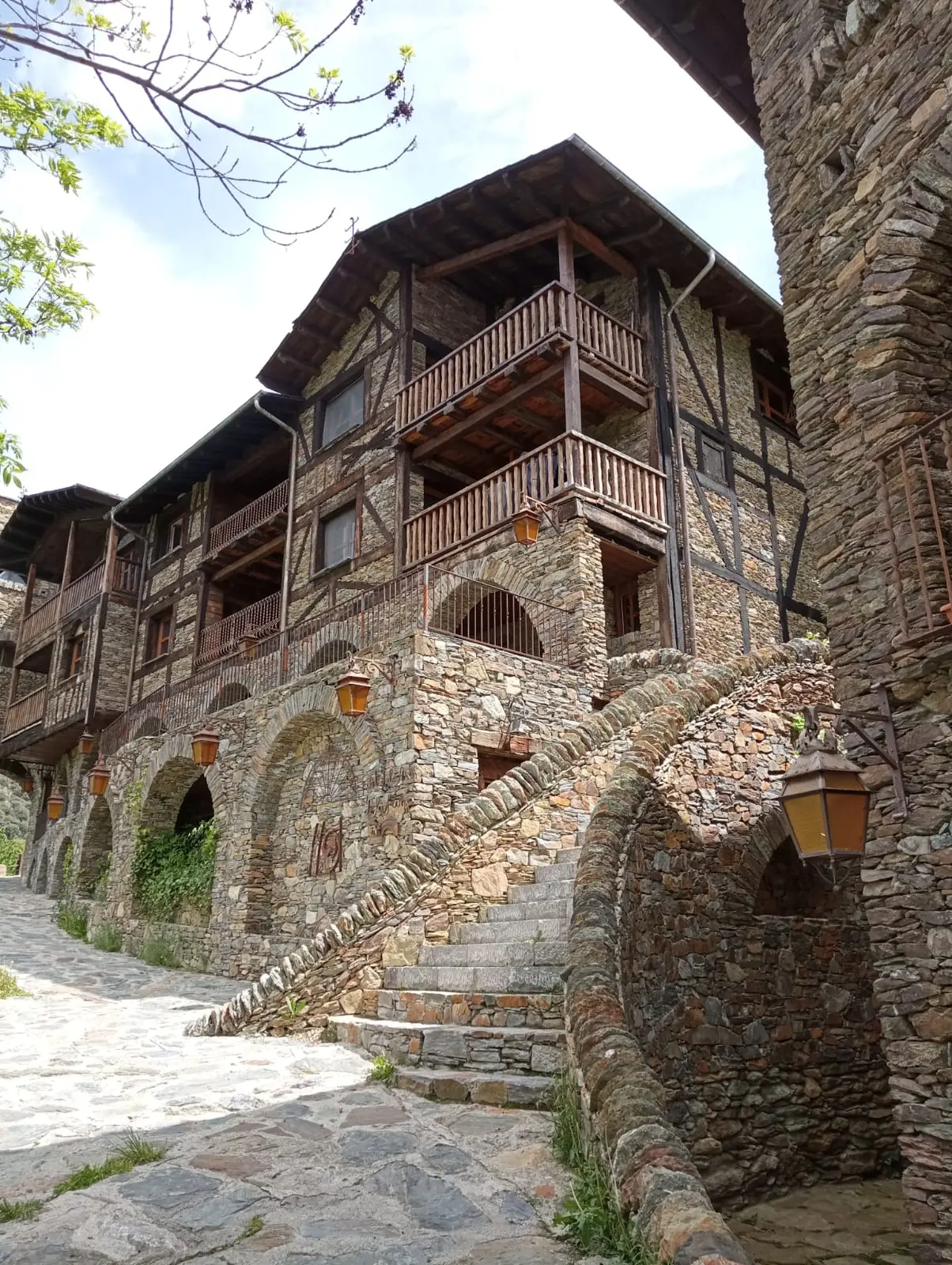
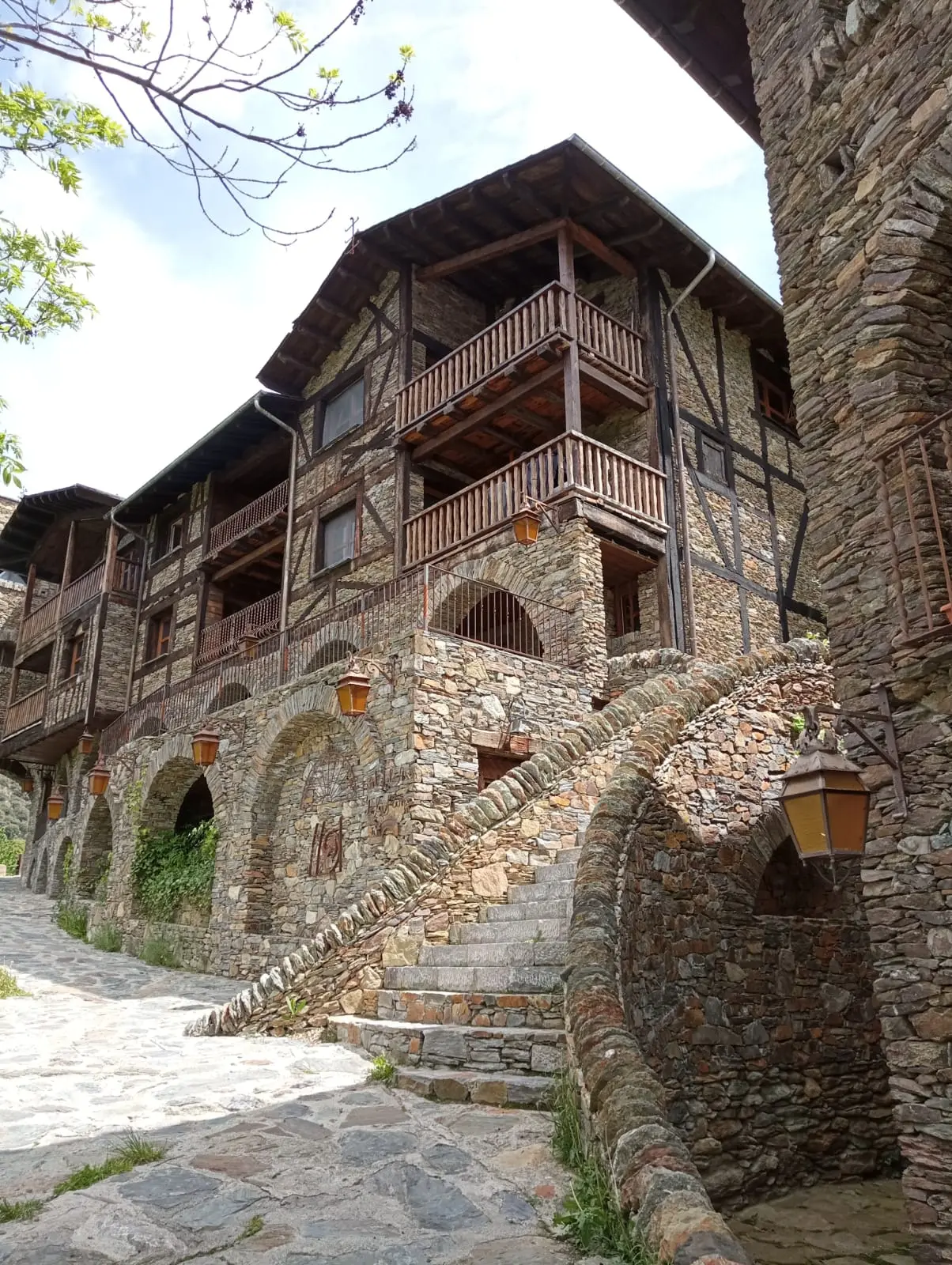
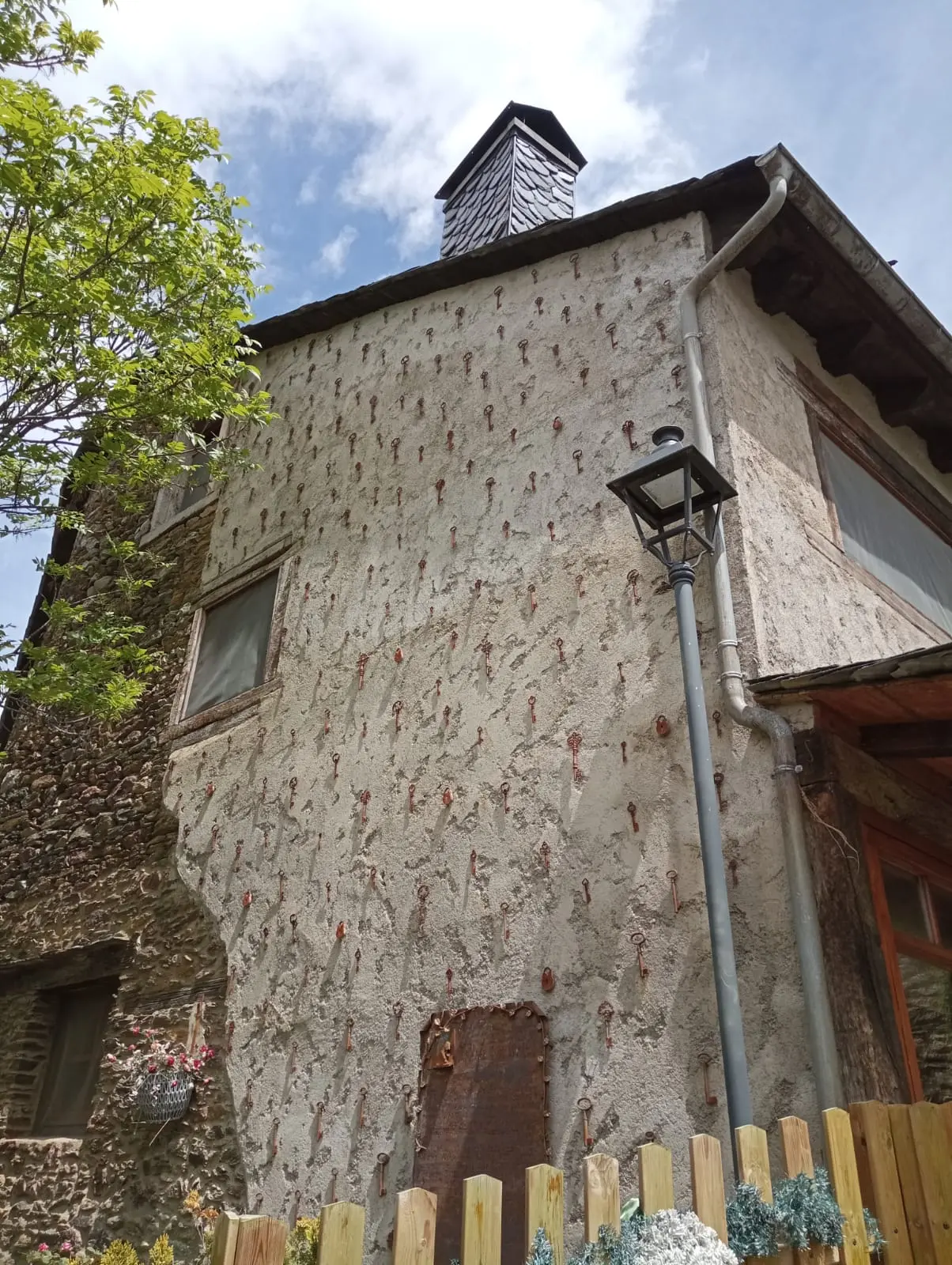
Auvinyà is a village in Andorra. Its origins date back to the 9th century. Casa Frare, with its facade covered in keys that you'll see during the tour, has been documented since 875 under the name "Albigano" and is the oldest building in the area.
The old town you see today, however, is the result of a much more recent project. In 2005, the Fiter family decided to restore the village starting from well-preserved old houses.
There's a well-known legend about the village. They say a lady dressed in white walks through its forests, watching over Andorra's independence and freedoms. The statue of a lady with a wolf references this legend.
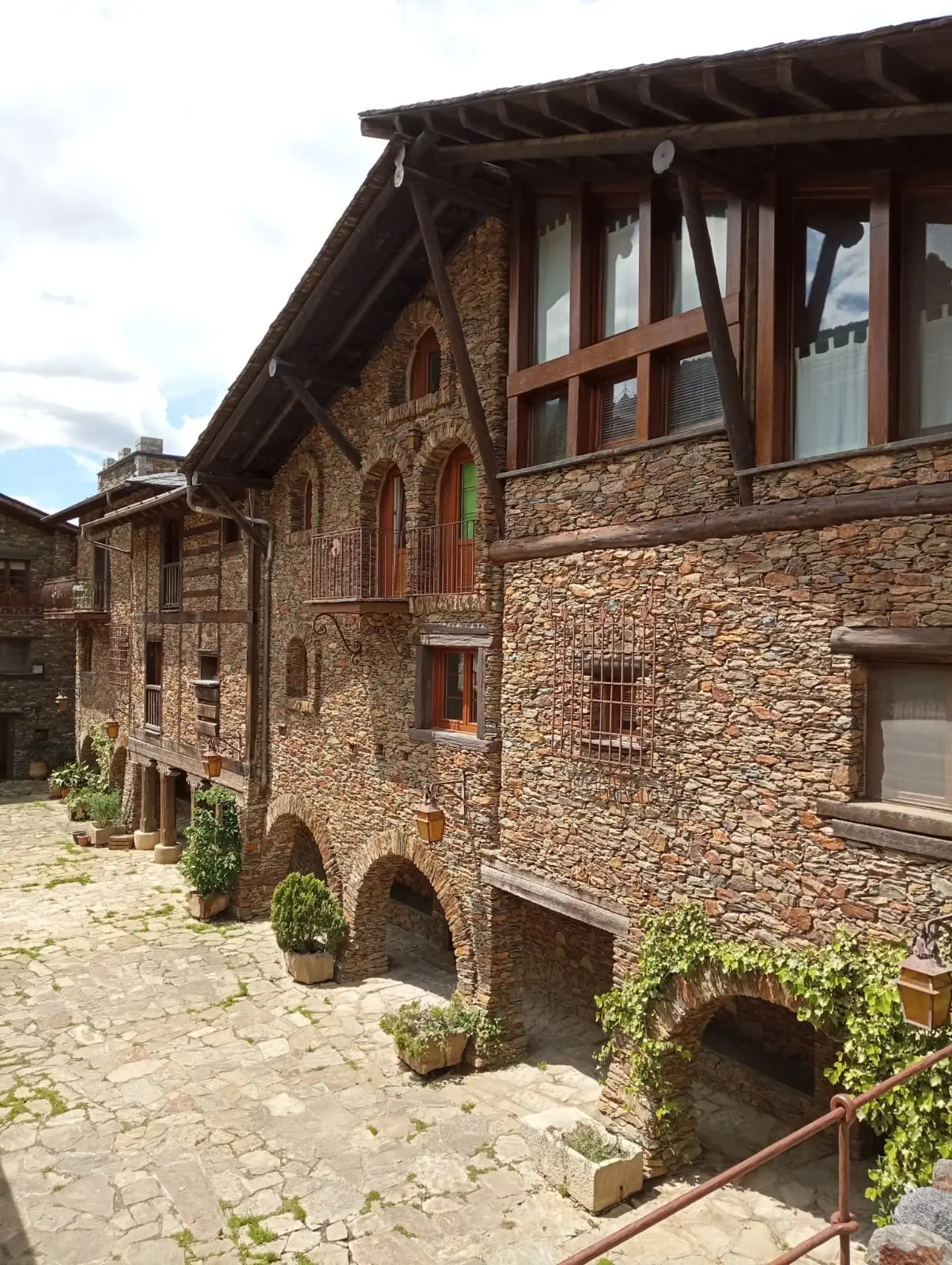
How to Get to Auvinyà and Where to Park
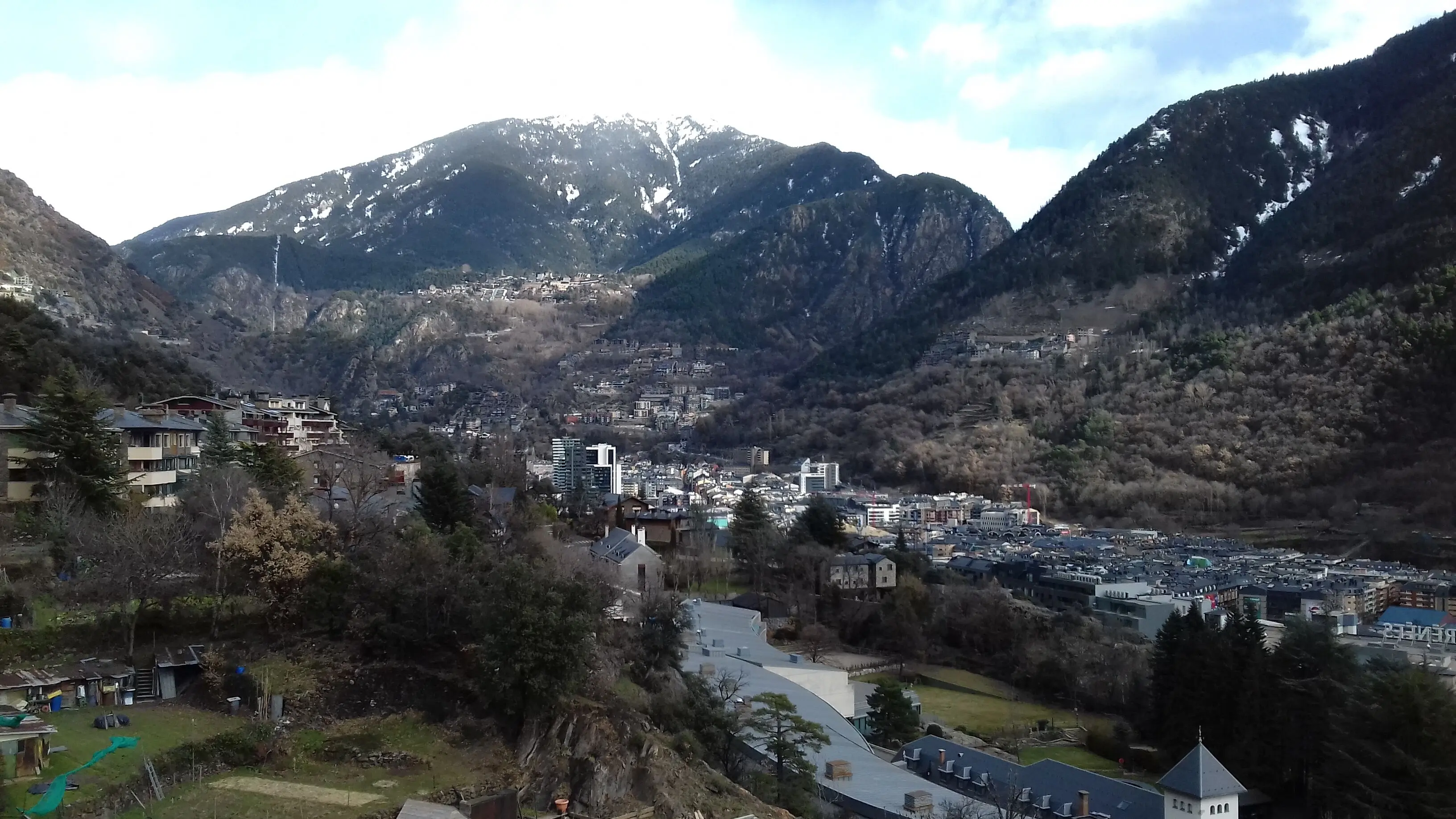
Auvinyà is located going up from Sant Julià de Lòria along the La Rabassa road, the same one used to get to Naturland and the Tobotronc. From the center of Sant Julià, the turnoff is just a few minutes away by car and is well signposted.
The most convenient option is to come by car and park at the parking lot right at the entrance of the village (maps link).
Besides that parking lot, my mom also saw cars parked near the roundabout before arriving, so if the main lot is full you can also leave your car there. In any case, once you park, the rest of the visit is entirely on foot along cobbled streets.
If you prefer public transport, there's a communal bus from Sant Julià de Lòria that goes up towards La Rabassa at certain times (line B2).
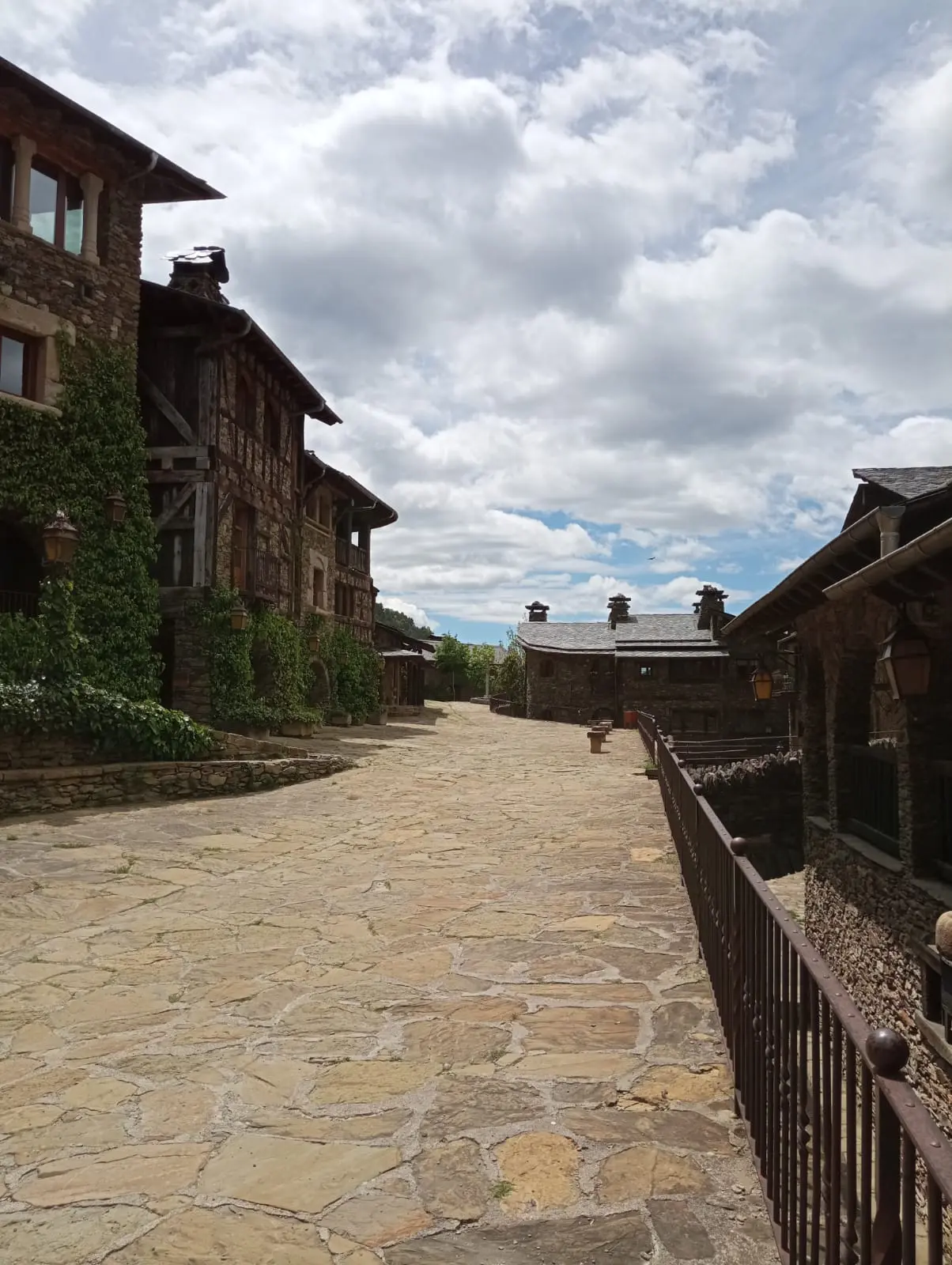
Photo Tour: What to See in Order
The best way to visit Auvinyà is to follow the natural entrance-walk-exit route, more or less in the same order as the photos from my mom's trip.
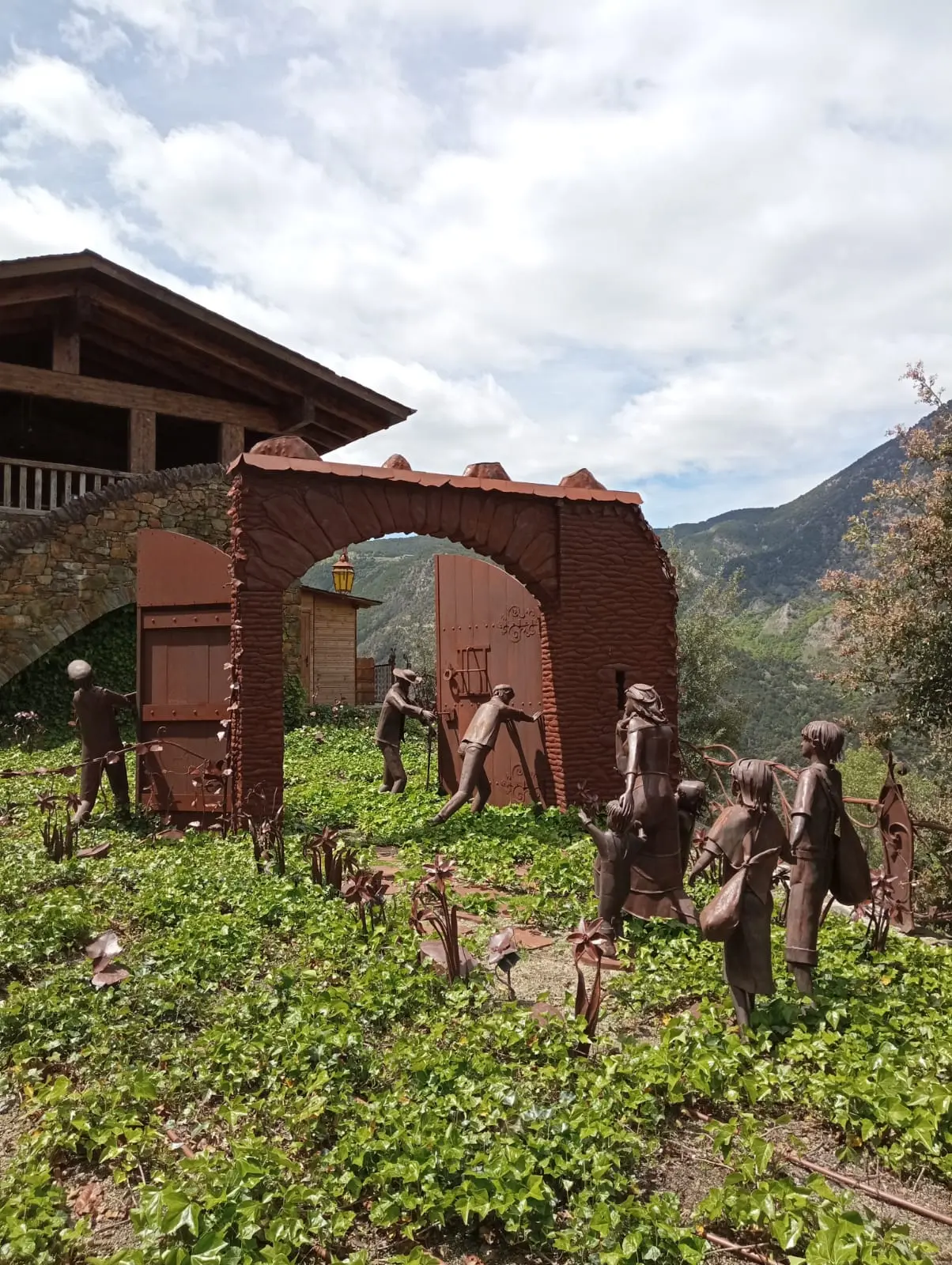
1. Village Entrance and Refugee Memorial
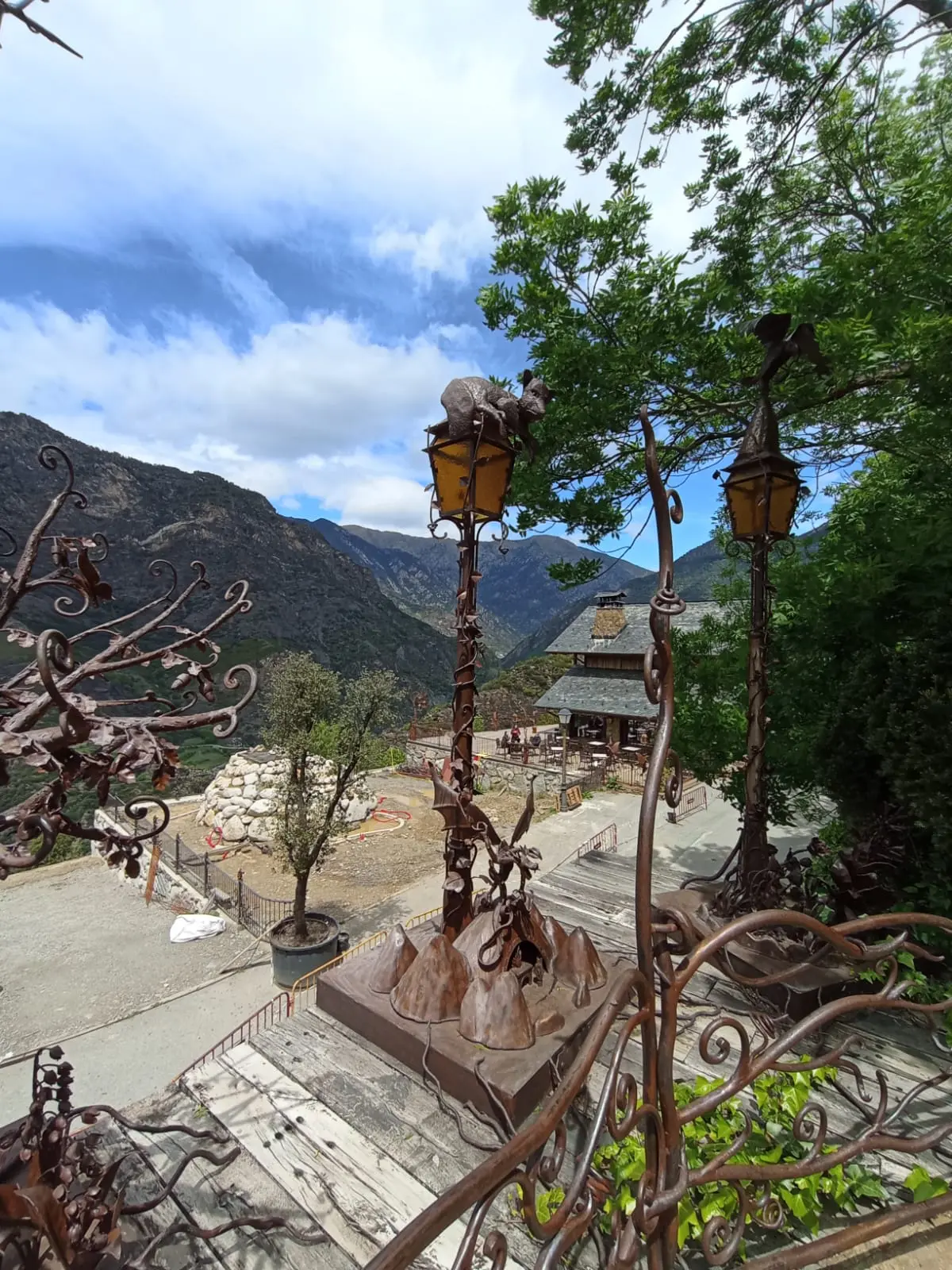
As soon as you arrive, you're greeted by a wrought iron sculptural ensemble dedicated to the refugees and fugitives who came to the Principality between the wars, and to the Andorran people who welcomed them. It depicts a mother and her children seeking asylum while Andorrans open the doors of freedom through the old entrance portal of Sant Julià de Lòria.
It's a handcrafted work by master blacksmith Jacobo Franco Asensio, created for the village of Auvinyà in autumn 2022.
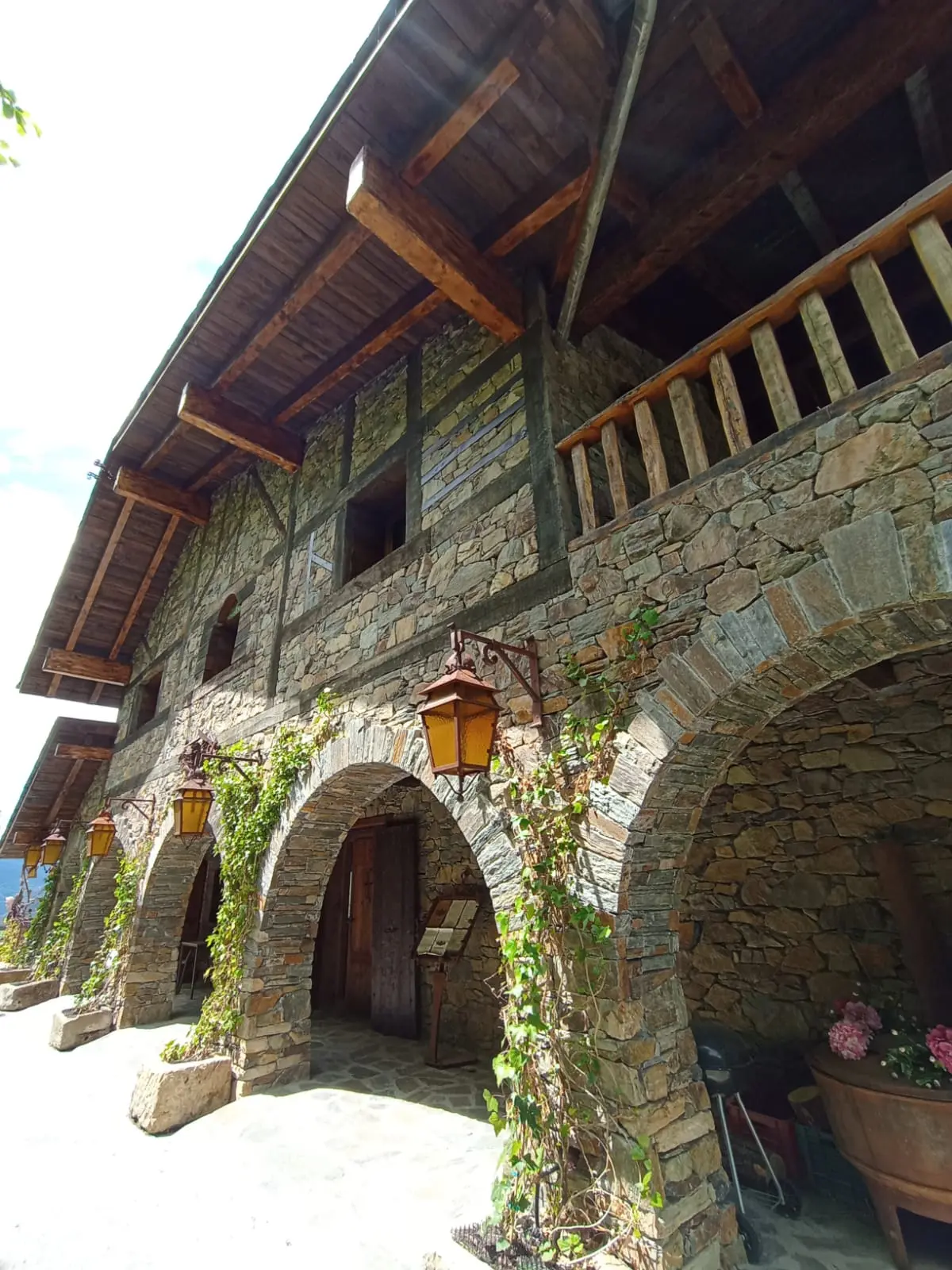
2. Restaurant at the Entrance
Right next to that sculptural ensemble you'll find the entrance restaurant, with a terrace and nice views of the valley. The spot is lovely, though according to reviews it's a bit pricey.
3. Welcome Video
Upon entering, there's a cabinet with a welcome video system. When you press the button, the doors open and a greeting appears in several languages.
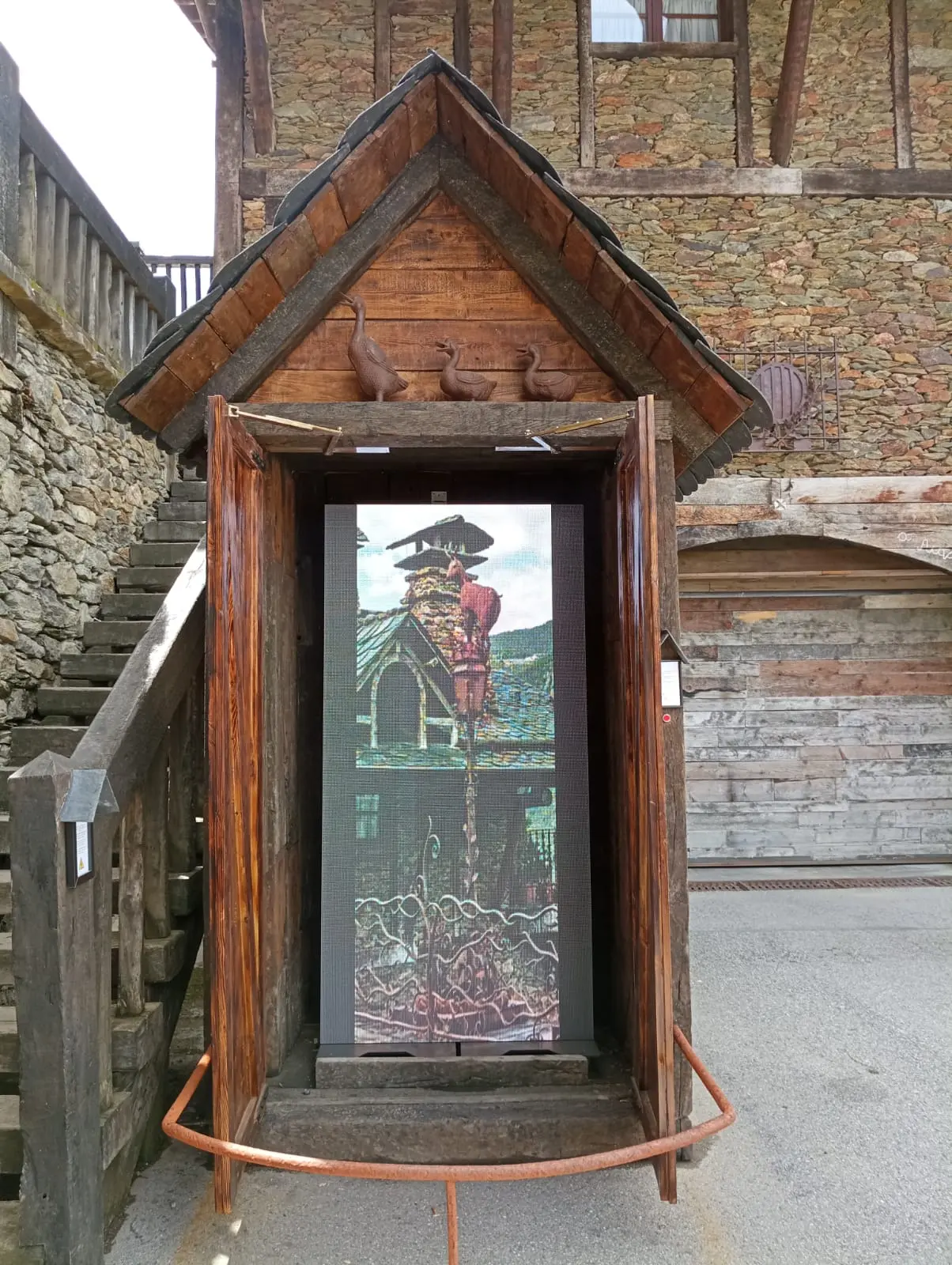
4. First Stretch: Squares, Benches and Viewpoints
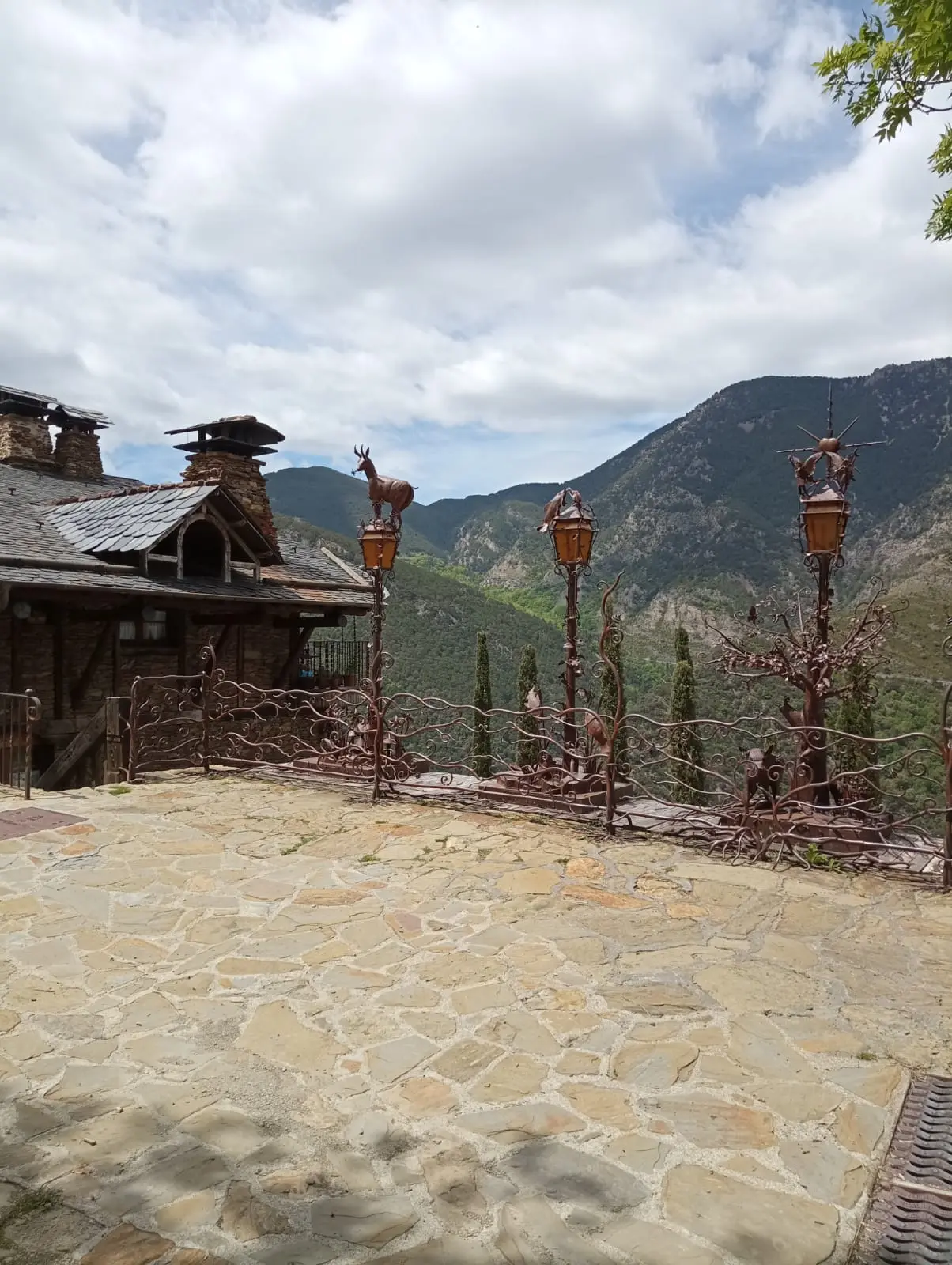
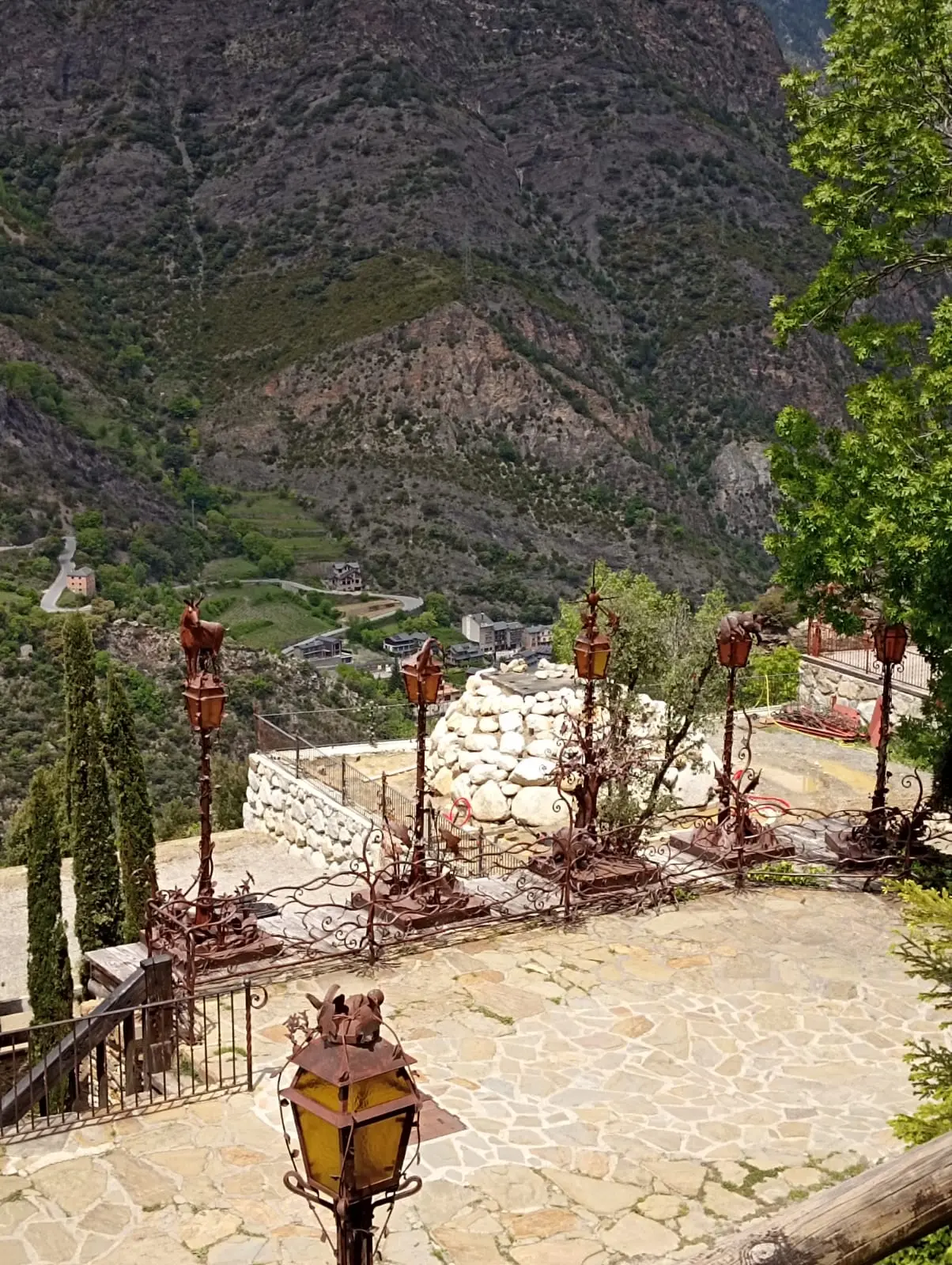
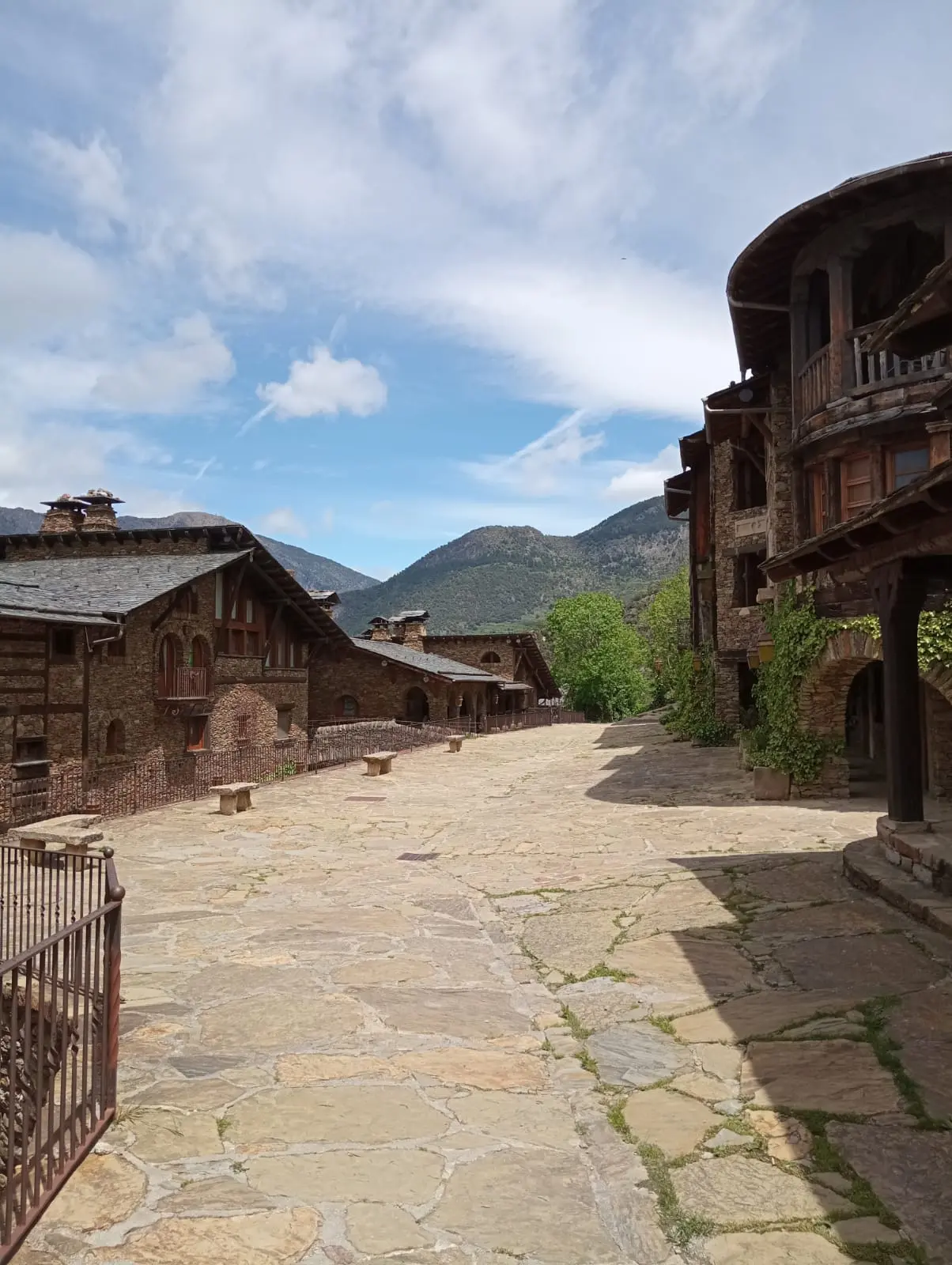
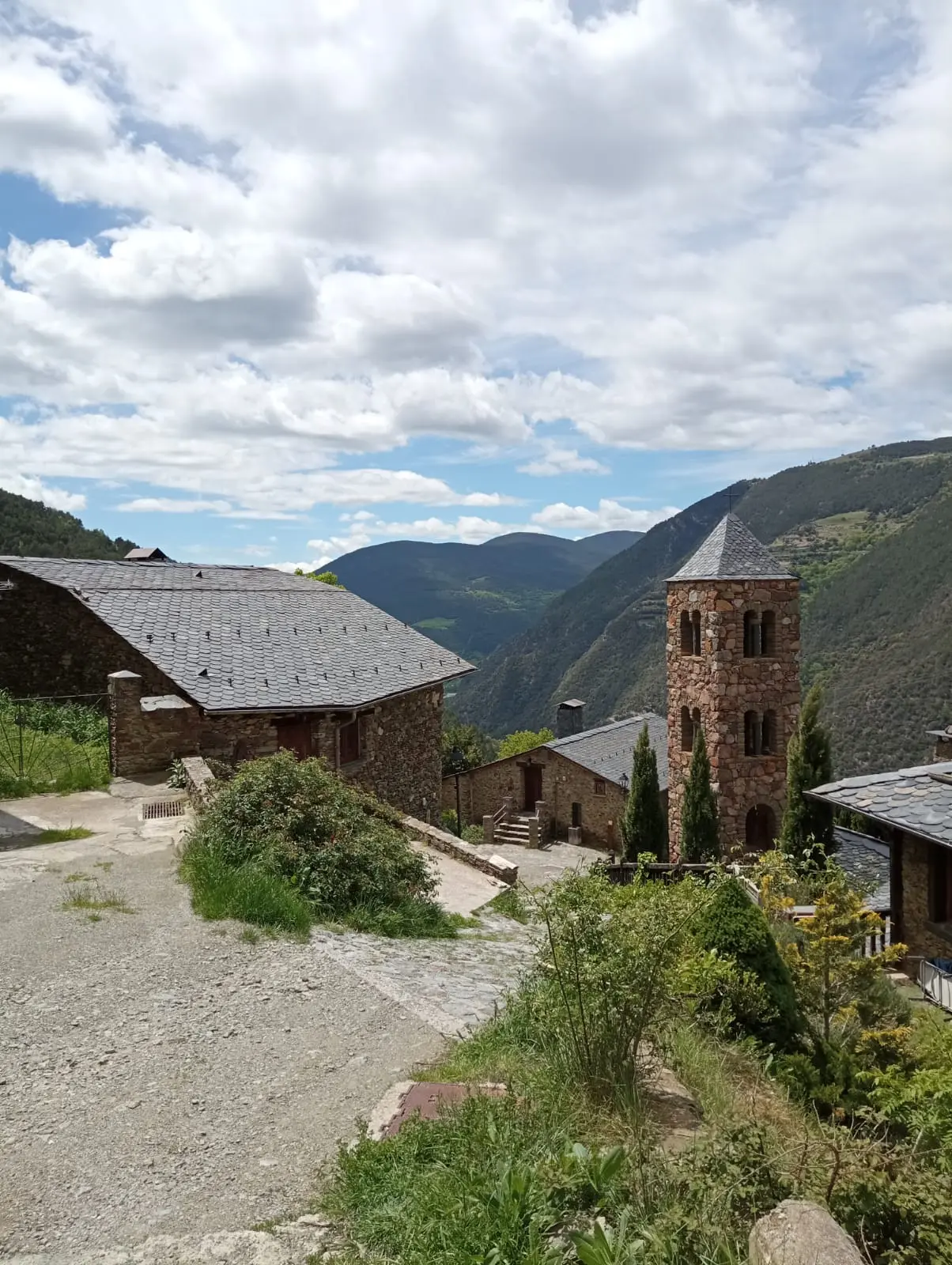
After passing through the gate, you start the first stretch of the walk, with small squares, benches to sit on and viewpoints facing the mountains.
5. Houses, Patios and Everyday Details
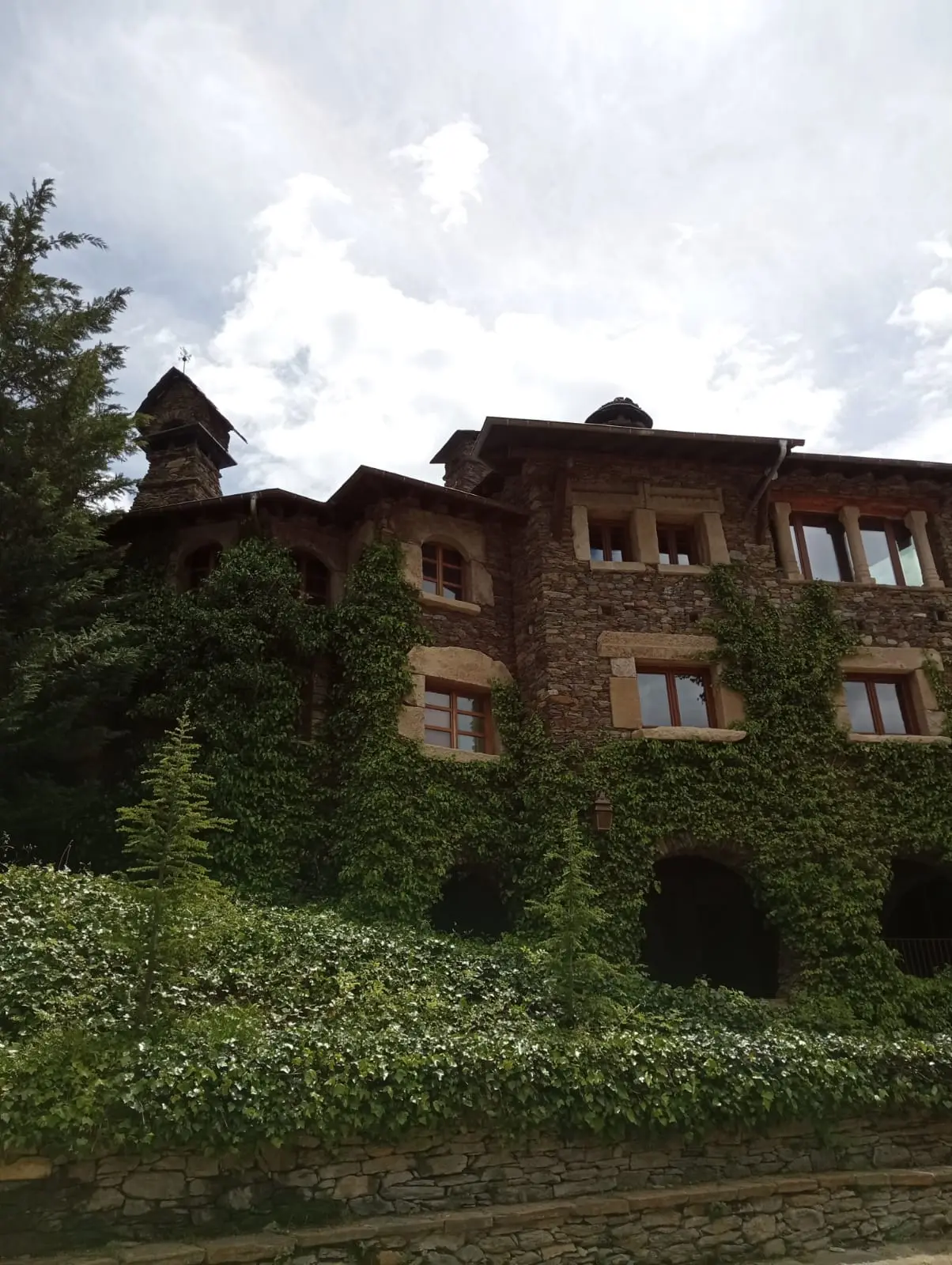
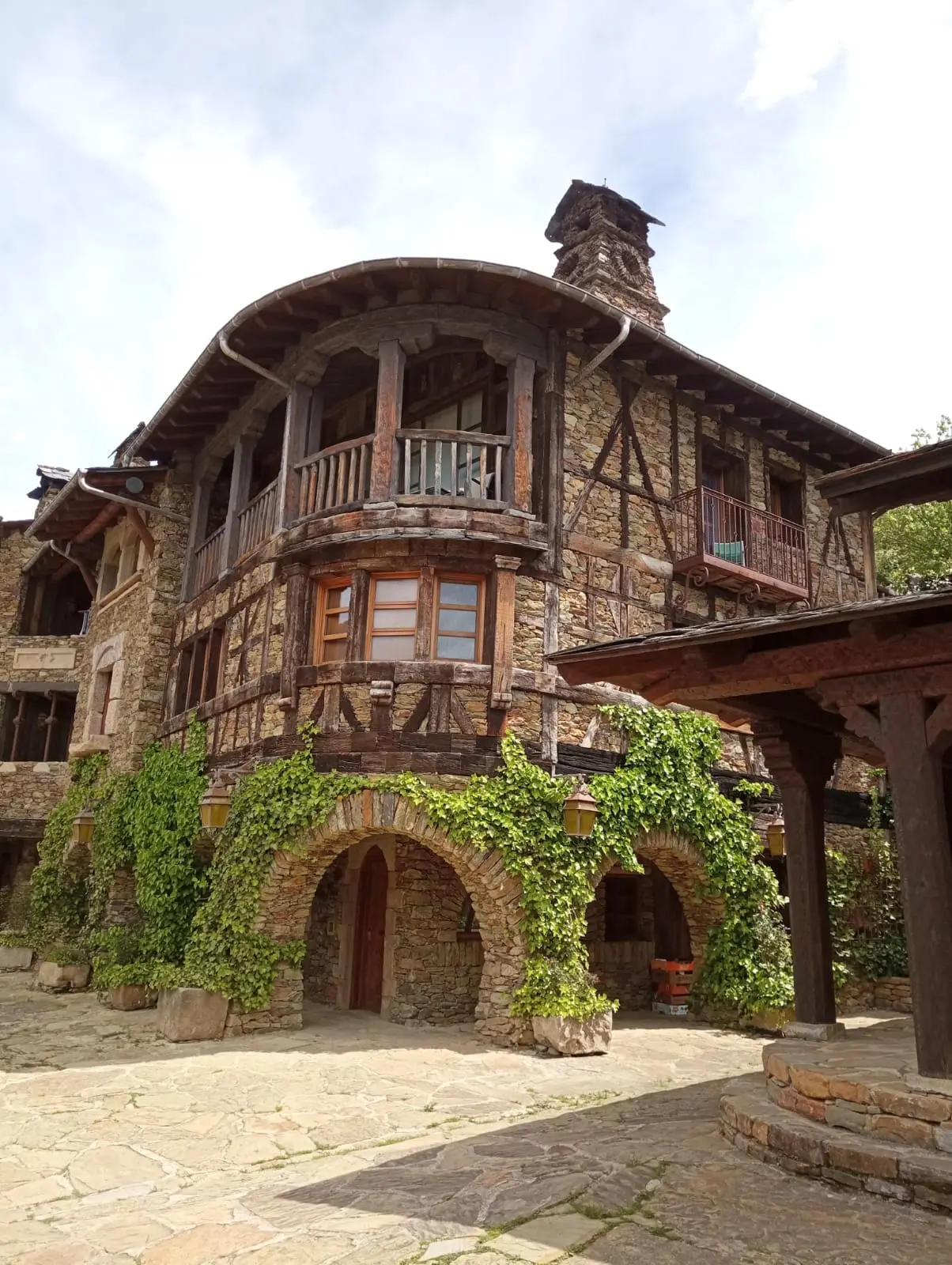
As you go further, you start seeing patios and terraces with everyday objects: small tables with chairs, pots, utensils, some parasols... All of this gives the feeling of a lived-in village, even though from the outside we can't be sure how many people actually live here year-round.
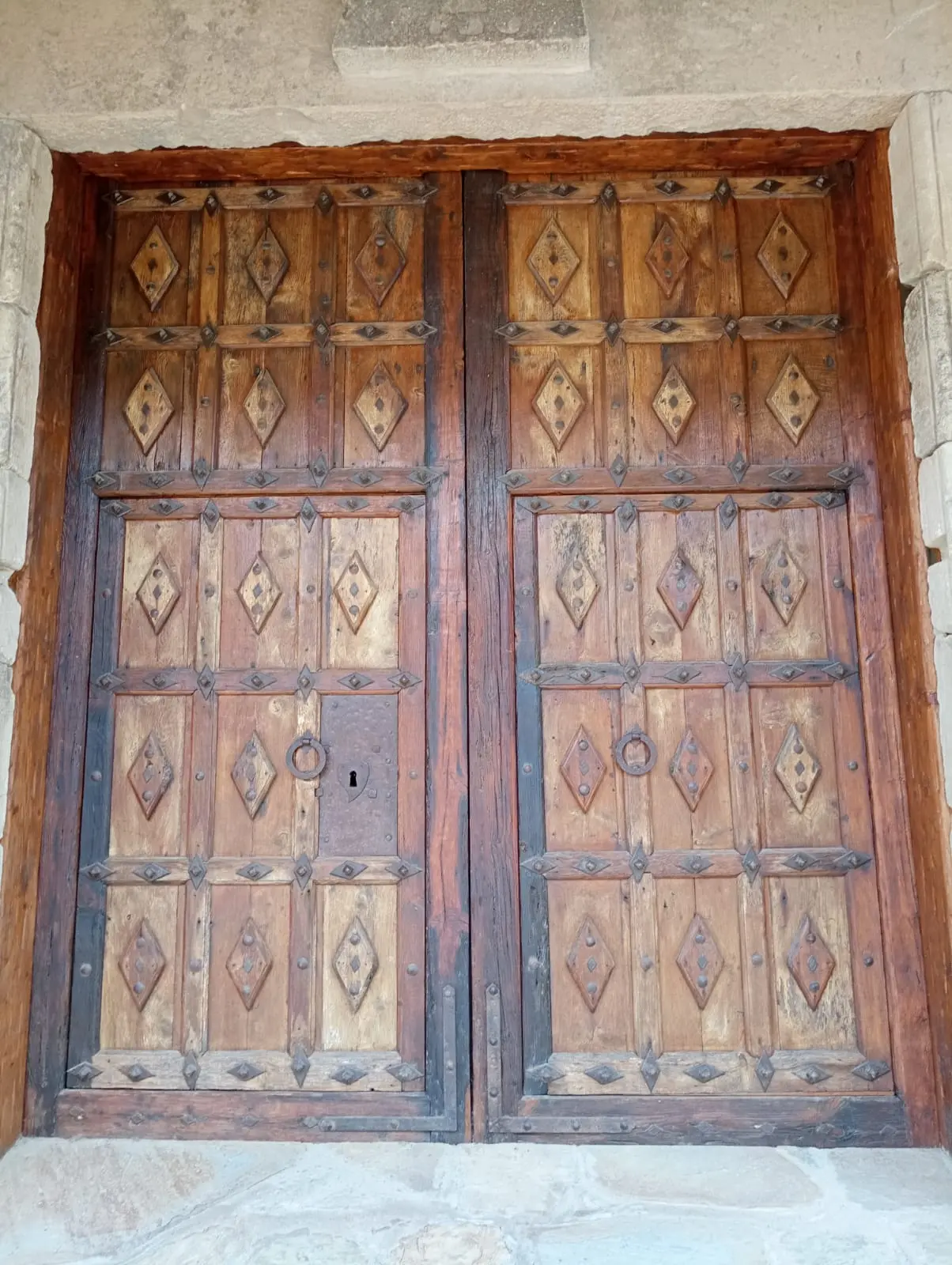
Also pay attention to the wooden doors (some with very fine carving work), the walls where keys and other decorative elements hang, and how stone, iron and vegetation combine together.
6. Church of Sant Ivo in Auvinyà
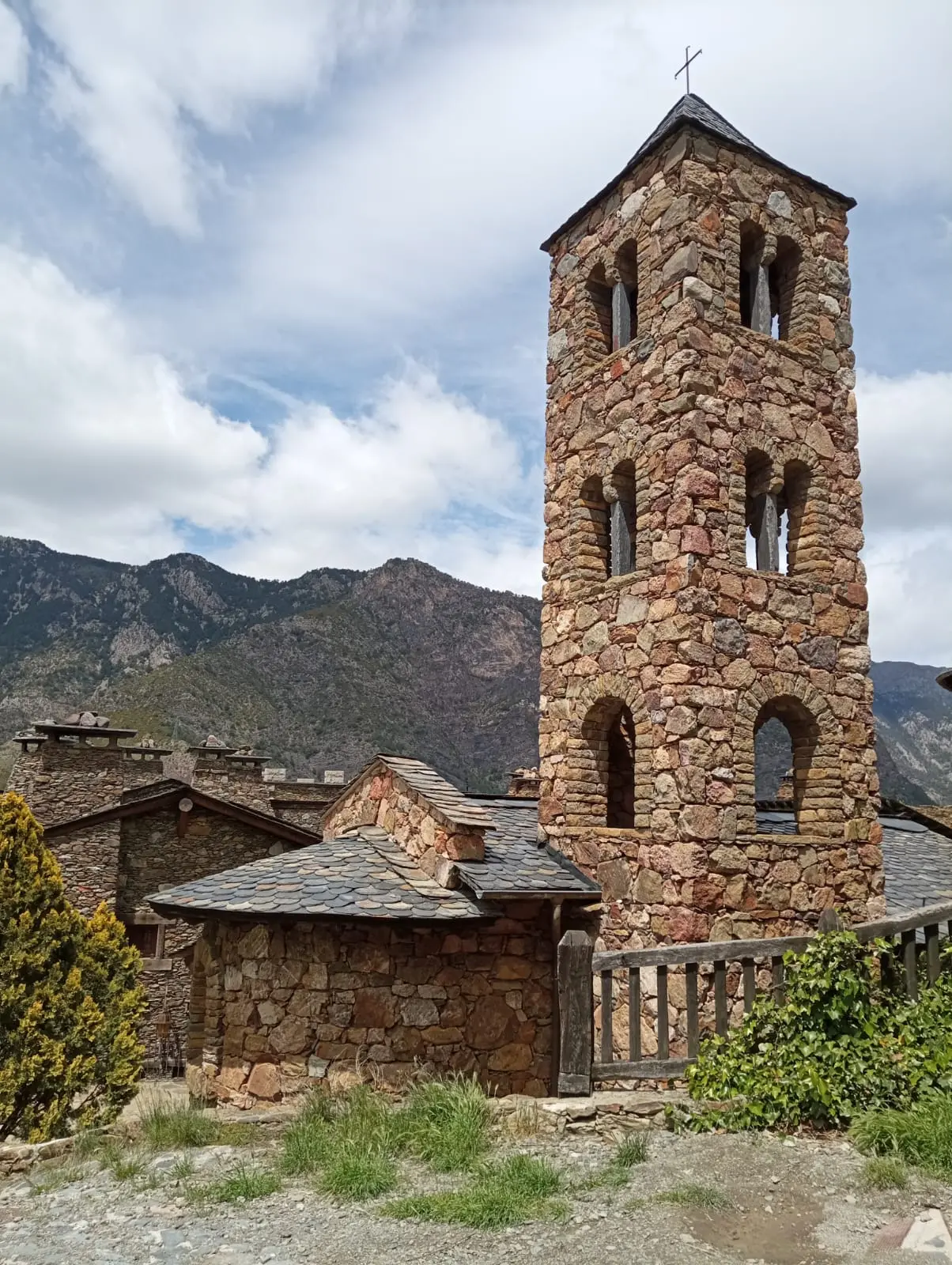
In the old town you'll see the small church of Sant Ivo, which appears in most photos of Auvinyà and in my mom's tour. It's a simple chapel, very well integrated into the stone house ensemble.
It's important not to confuse it with Sant Romà d'Auvinyà, which is in another location in the parish and belongs to a different context. Here, in the village you visit on this walk, the reference is Sant Ivo and its immediate surroundings, with the views and the houses that surround it.
7. Iron Sculptures and Lampposts
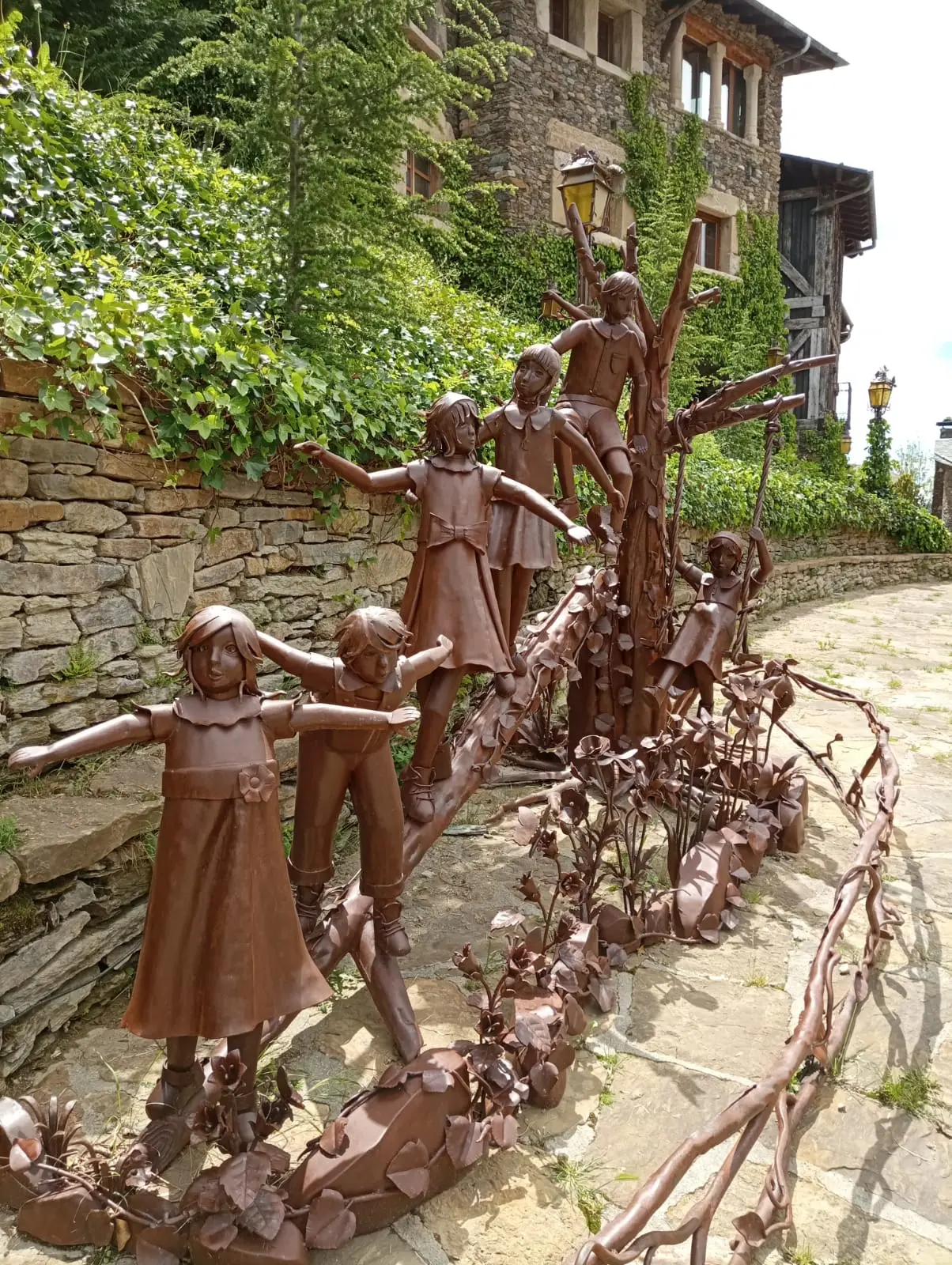
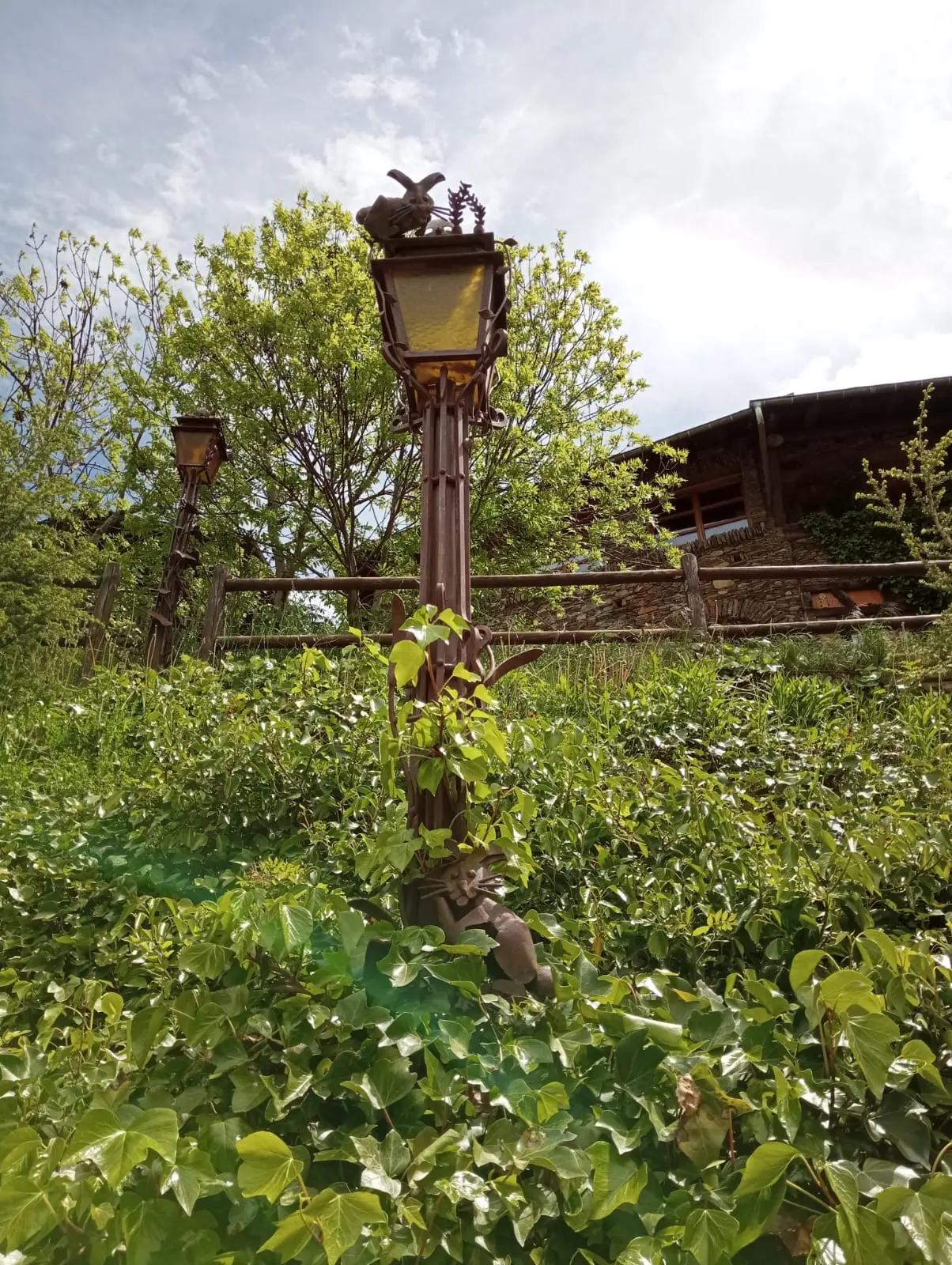
One of the threads running through the walk are the wrought iron sculptures and details: figures of children, animals, flowers, pieces hanging from roofs and lampposts... and a whole series of small surprises that make you look up.
The plaque at the start already hints at it: the old town of Auvinyà has been worked with great intention through forging, and the sculptures you come across — including the one dedicated "als nostres infants, el tresor de la vida més estimat…" — reinforce that feeling of an open-air gallery-village.
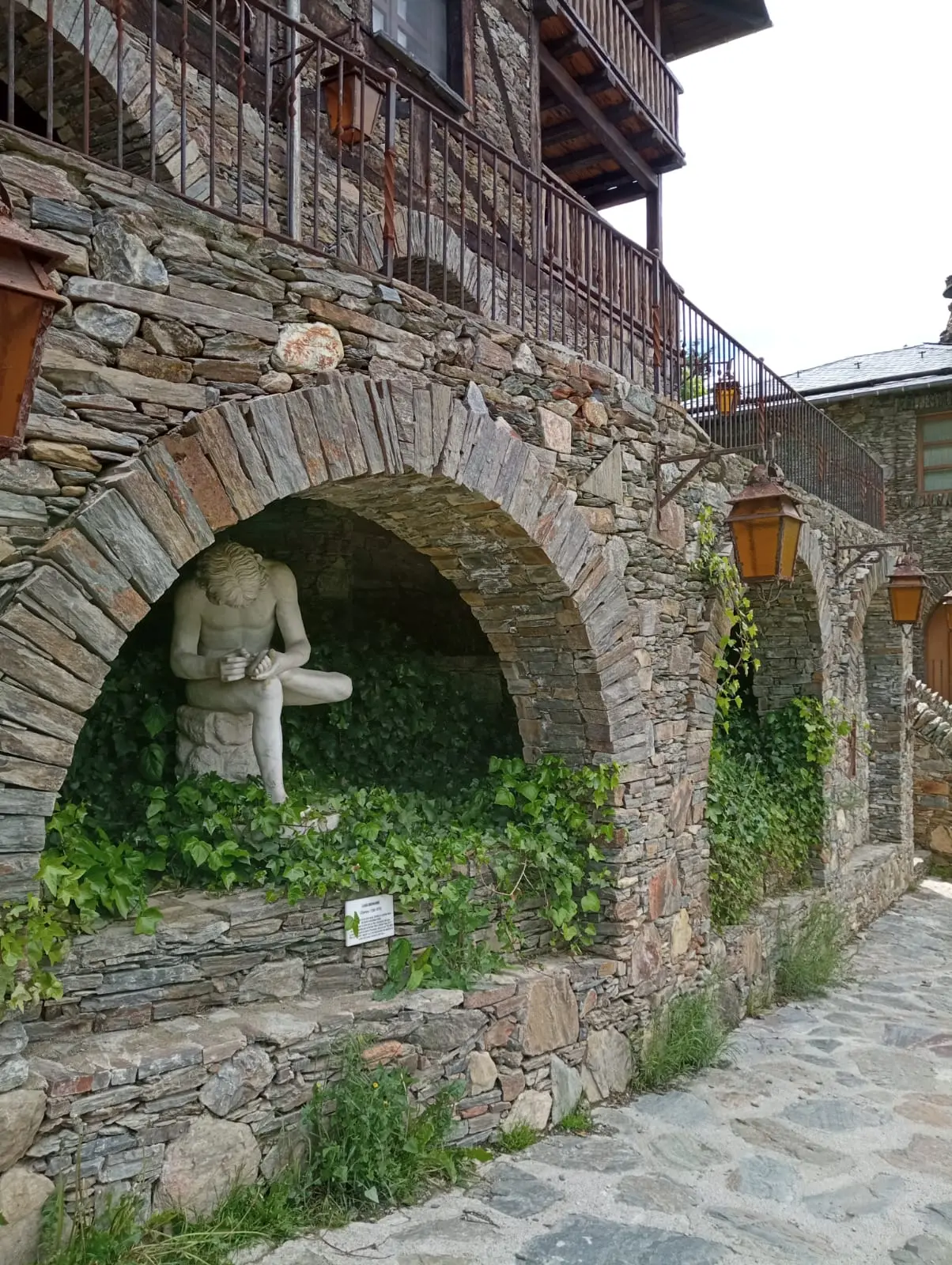
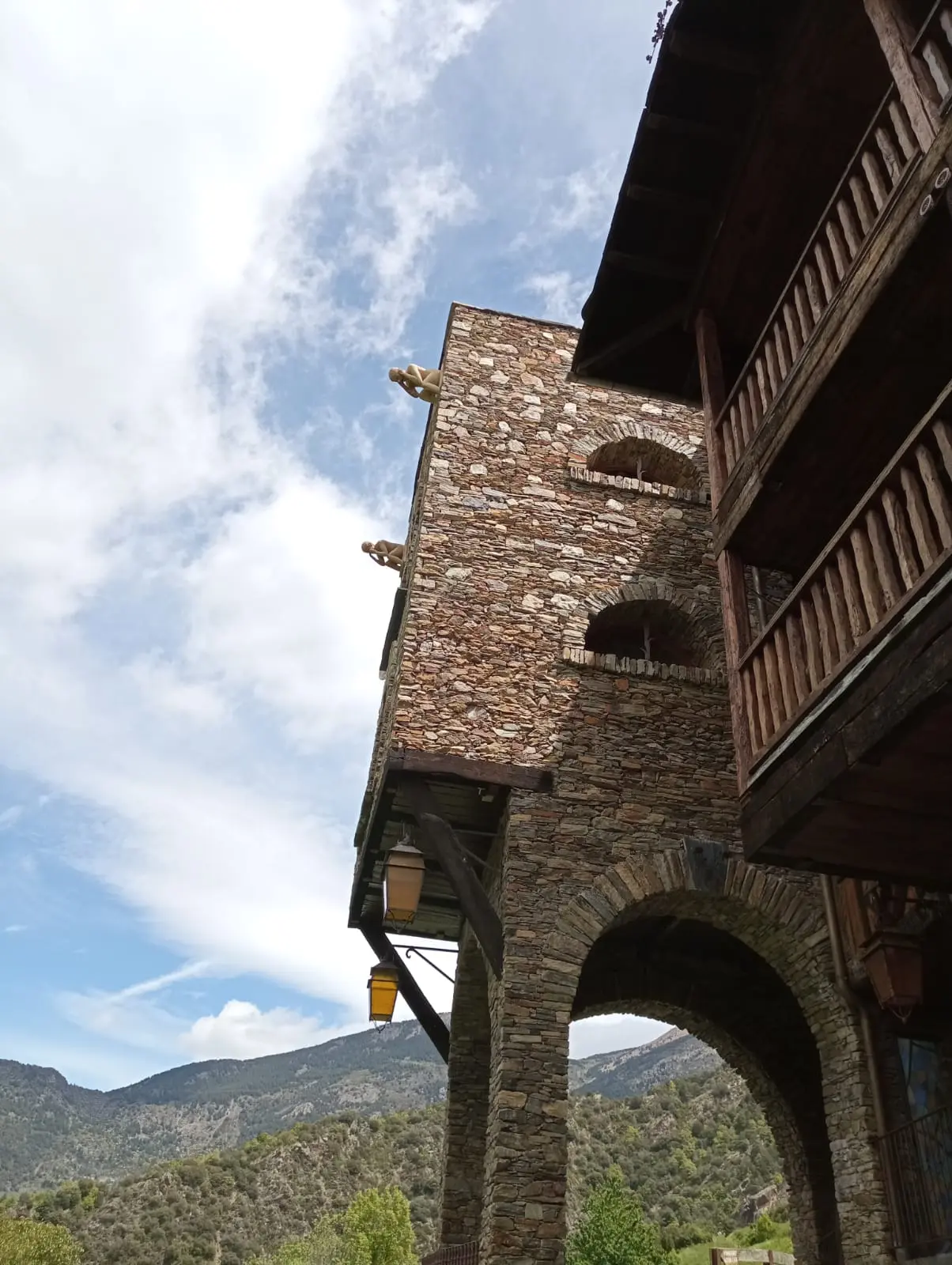
8. Cats Around the Village
Between photos of houses and sculptures, my mom came across several cats sunbathing in the streets and patios.
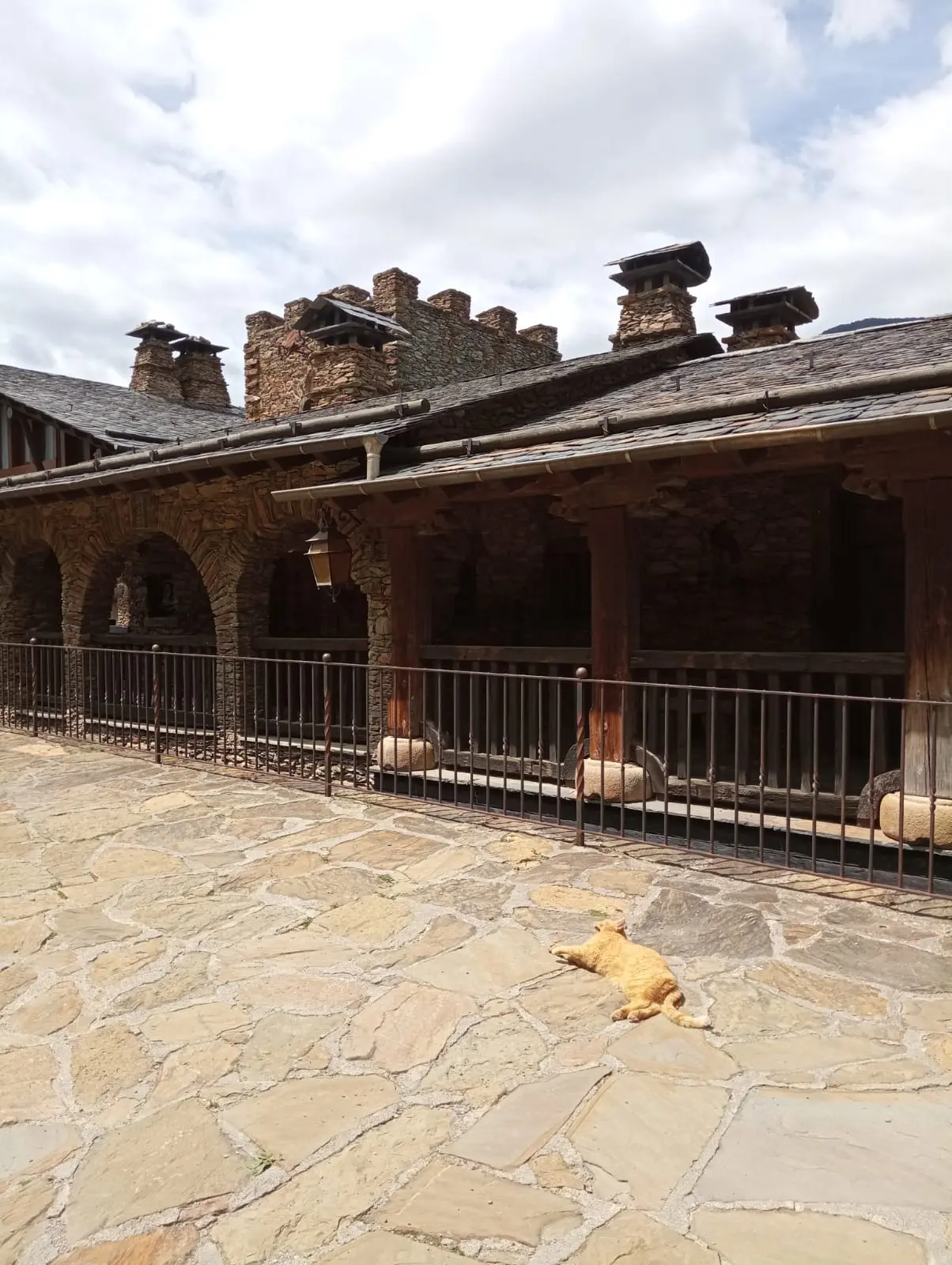
9. Views and Photos Along the Route
The route is full of photo opportunities. The best views are looking towards the valley from the viewpoints, observing the sculptures with the mountain in the background, and noticing the wrought iron details scattered throughout the village. If you love viewpoints, check my guide to the best viewpoints in Andorra.
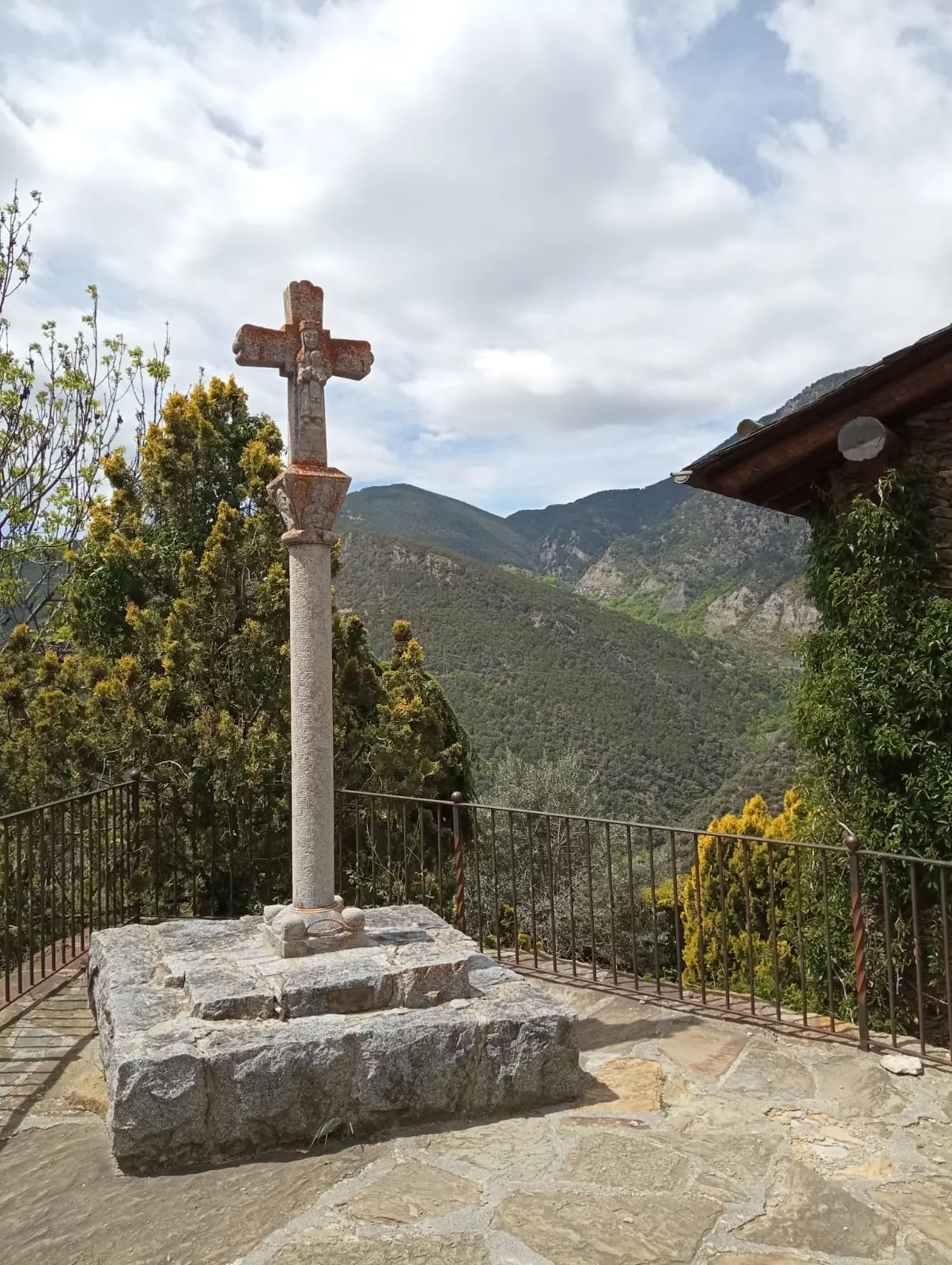
10. More Photos of Auvinyà
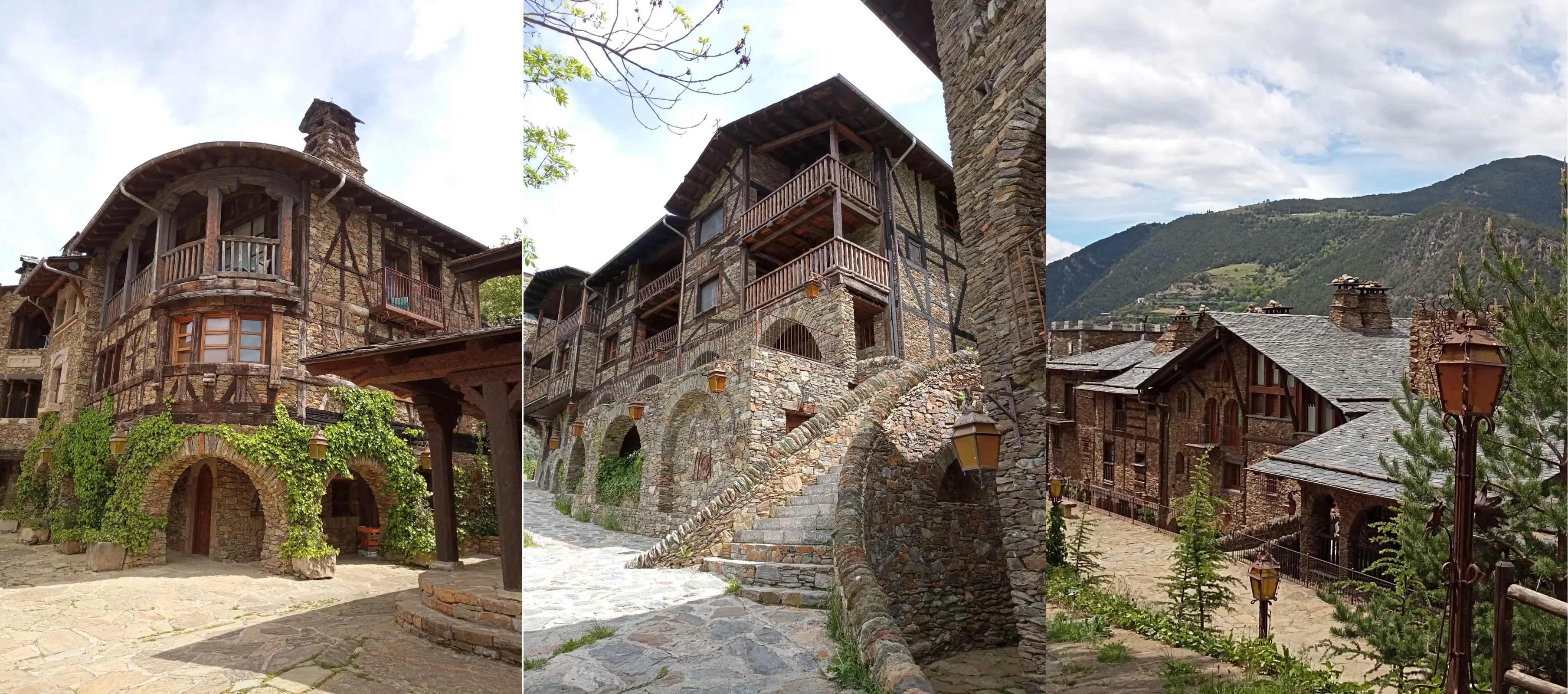
If you want to see more photos of the village, here's a gallery with additional images of facades, architectural details, sculptures and views that capture the charm of Auvinyà.
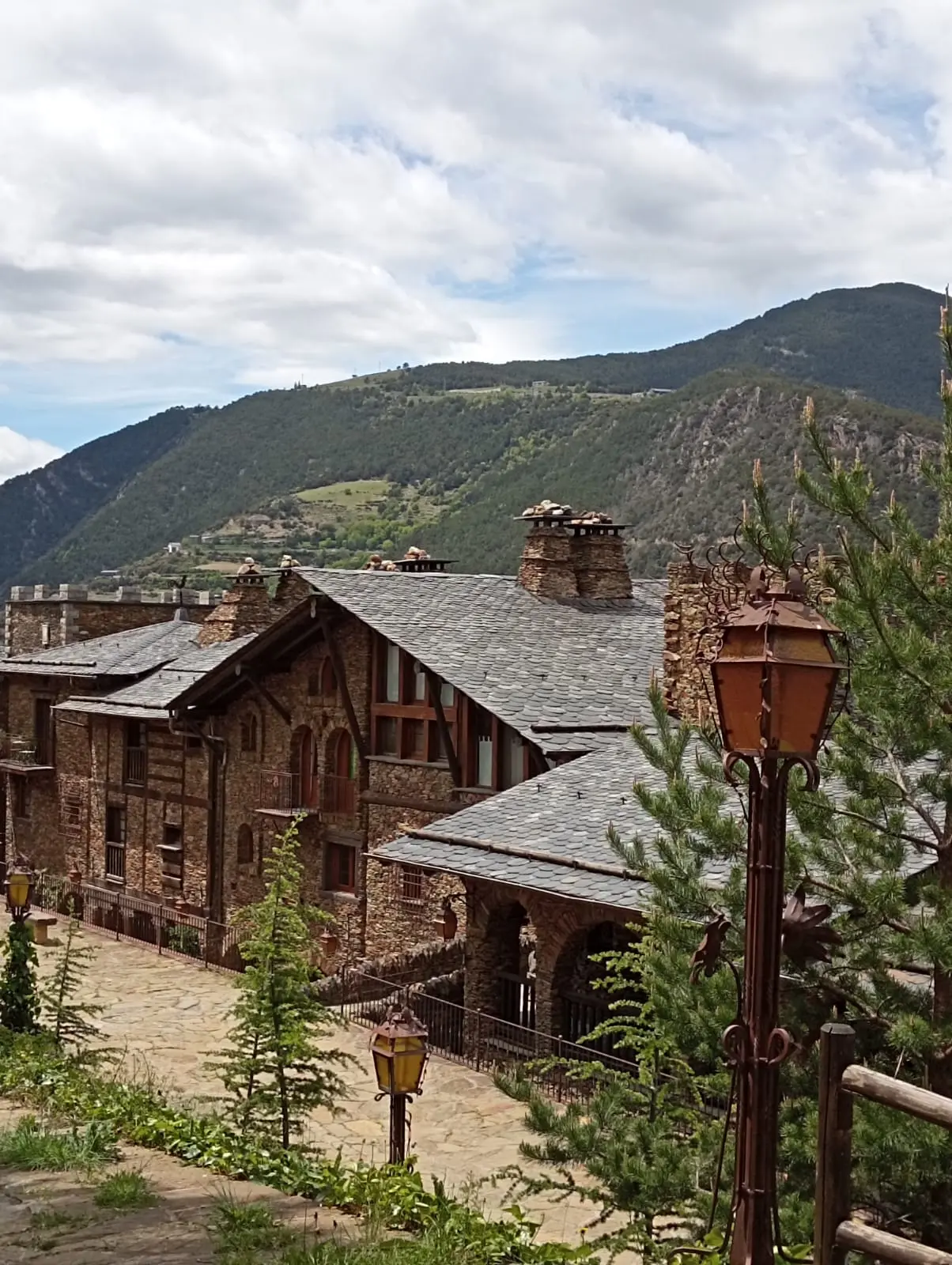
Vista general del casco antiguo de Auvinyà.
Hiking Trails from Auvinyà
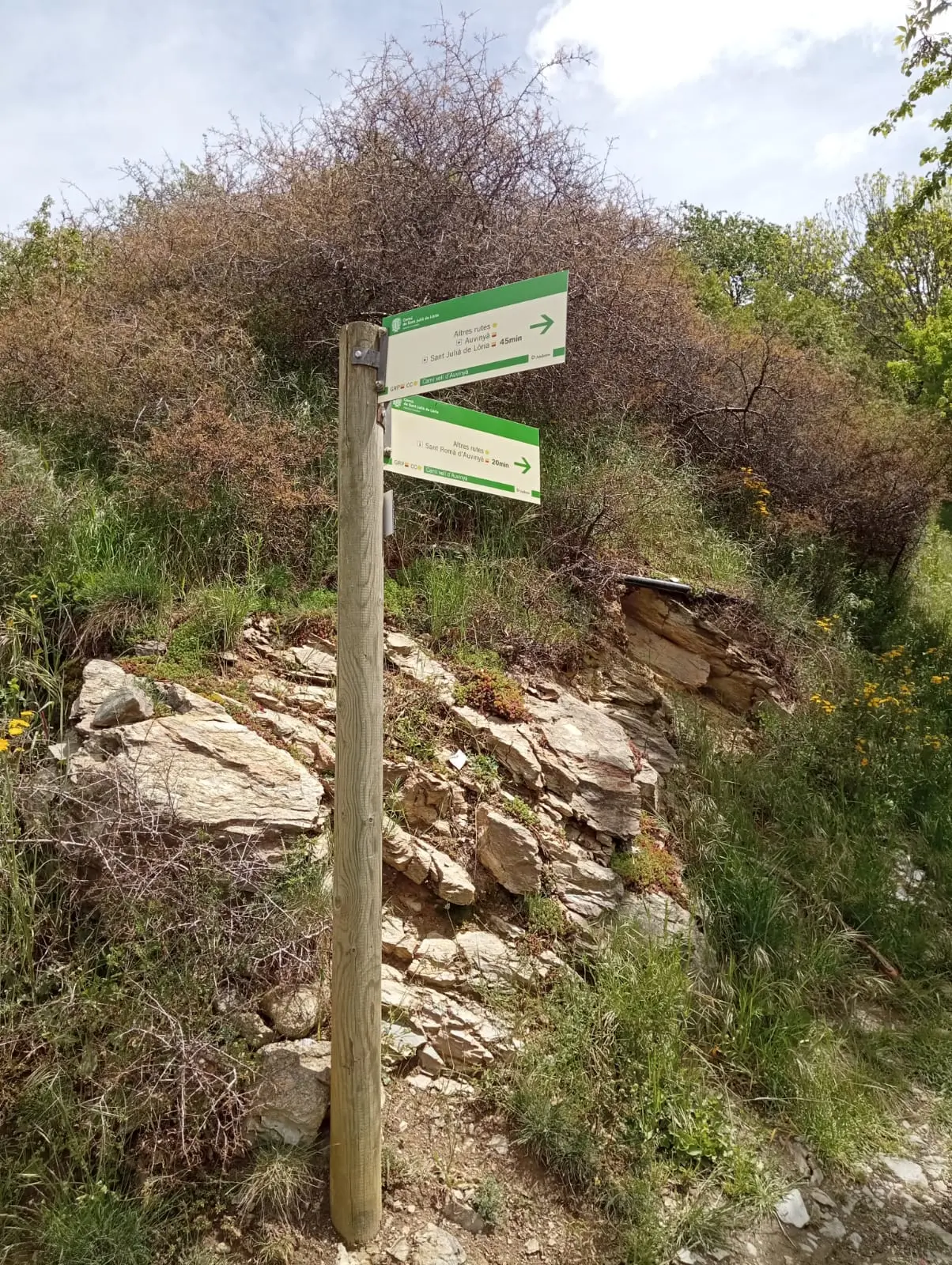
Although this guide is mainly intended as a short cultural visit to the village, there are interesting trails starting from Auvinyà if you want to extend your day.
The Camí vell d'Auvinyà, according to VisitAndorra, is a moderate difficulty route, about 8.5 km long, with a positive and negative elevation gain of around +517 / -517 m and an estimated time of 3 to 6 hours, depending on pace and stops.
The MTB Trail 61 Sant Julià de Lòria – Auvinyà – Sant Julià de Lòria is a challenging mountain bike route, about 11 km, with an elevation gain close to +533 / -533 m and high difficulty.
The idea is to let you know these options exist, but without mixing concepts: visiting the village is short and accessible; doing the trails requires different planning in terms of time, equipment and fitness.
What to See Near Auvinyà
If you're going up to Auvinyà, it makes sense to pair it with other interesting spots in the area:
- Naturland and the Tobotronc: the nature and leisure park in La Rabassa, with the famous mountain toboggan, further up the same road.
- Juberri Gardens: a collection of sculptures and gardens in another hamlet of Sant Julià, already covered in the beautiful villages of Andorra guide. In 2026 it's being dismantled, but if you're lucky you might still see something.
- Margineda Bridge: one of the most notable historic bridges in Andorra, also in the parish of Sant Julià.
- Center of Sant Julià de Lòria: perfect for combining quick shopping, a museum or just a coffee, especially if you're entering or leaving Andorra through the Spanish border.
In my guide to the most beautiful villages of Andorra I tell you about other pretty villages in Andorra. If you like medieval villages, don't miss Les Bons, with its Romanesque church and the Torre dels Moros. You can also see how to fit Auvinyà into a more complete itinerary in my Andorra in 2-3 days guide.
Born and raised in Encamp, Andorra. In my free time I explore my country and share the best activities, trails and hidden spots that most travel guides don't mention.